A Crown, A Crumb, A Controversy –
The Story of Brioche
In the heart of France, bread is more than sustenance, it is a conversation with history. Every loaf tells a story: of soil, of grain, of the hands that knead and shape it. But among these stories, one loaf stands apart, not rustic and humble, but rich, golden, and unapologetically indulgent. Its name is Brioche, and its story rises like its dough, slowly, gracefully, with layers of meaning beneath its glossy surface.
The Birth of a Richer Bread
The earliest whispers of brioche come from Normandy, a region where cows graze on emerald fields and butter reigns supreme. In the 15th century, French bakers began enriching their bread doughs with eggs, milk, and butter, transforming a peasant staple into something luxurious. This was no longer just bread, it was a statement. A loaf so tender it tore like silk, so fragrant it perfumed the morning air.
The name brioche likely comes from the Old Norman verb brier, meaning to knead. And knead it they did, carefully, rhythmically, folding in butter until the dough gleamed with promise. The result was a bread that straddled two worlds: humble and holy, every day and extravagant. It was bread, but it was also almost cake.

A Loaf Fit for Celebration
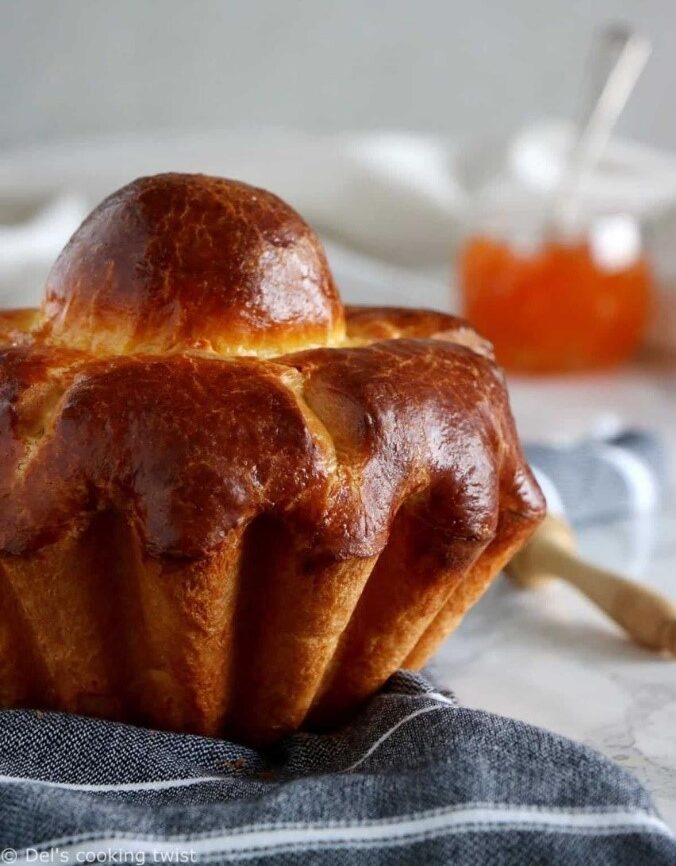
For centuries, brioche appeared not on the common table but on the feast table, a symbol of joy and prosperity. It was baked for weddings, baptisms, and religious festivals, its golden dome often shaped like a crown. The rich, eggy crumb became a taste of celebration itself, a reminder that even ordinary ingredients could become extraordinary in the right hands.
“Let Them Eat Cake” – Or So They Say
No story of brioche is complete without the words that turned it into legend. “Qu’ils mangent de la brioche.” Translated loosely as “Let them eat cake,” the phrase has echoed through centuries as a symbol of aristocratic blindness. The world remembers it as the moment Marie Antoinette dismissed the hunger of her people.
But history tells another tale. The line first appeared in Jean-Jacques Rousseau’s Confessions, written when Antoinette was only nine years old. There is no record of her saying it. And even if she had, the translation is misleading. Brioche is not cake, it is bread, merely made richer. The supposed quote was less about luxury than irony: if the poor had no plain bread, perhaps they might turn to the enriched one.
Bread, Power, and Perception
Still, the damage was done. The phrase took on a life of its own, and brioche became a symbol, not of sustenance, but of separation. Between those who could afford butter and those who could not. Between the gilded tables of Versailles and the empty shelves of Paris. In the story of France, bread was politics, and brioche was a privilege made edible.
Yet, perhaps unfairly, the loaf bore the weight of this misunderstanding. It was never meant to mock the hungry; it was meant to celebrate abundance, to honor craft and care. It is a reminder that food often reflects our social divides, but also our shared humanity.
The Modern Legacy
Today, brioche has outlived its controversy and found new life in kitchens around the world. Its soft, rich crumb has become the base for French toast, babka, and even the burger bun, a humble role for a once-regal loaf. Bakers continue to shape it into braids, rolls, and domes, brushing each with egg wash until it shines like gold under the oven light.
Every bite carries centuries of evolution, from feast tables to cafés, from scandal to comfort. The same butter that once symbolized excess now whispers of warmth and home.
More Than a Loaf
In the end, brioche is not just about flavour, it’s about balance. Between lightness and depth, simplicity and luxury, history and myth. It is a loaf that teaches us that richness isn’t always arrogance, and that indulgence, when shared, can be its own kind of grace.
So let them eat brioche, not as a symbol of division, but as a reminder that even the softest bread can carry the weight of time and the beauty of resilience.